
Introduction
Digital Healthcare is a multidisciplinary concept that applies digital transformation to incorporate software, hardware and services in the field of healthcare. Digital Healthcare forms the bridge between Healthcare and Technology. Digital Healthcare is not only restricted to Telemedicine or telehealth but has expanded its horizons to mobile health (mHealth) apps, Electronic Medical Records (EMRs), Electronic Health Records (EHRs), wearable devices and Personalised Medicine.
Stakeholders in the field of Digital Health include Practitioners, patients, application developers, Researchers and manufacturers and Distributors of Medical devices. Digital Healthcare has henceforth become a major part of Healthcare today. Crucial terms related to Digital Healthcare include Health Analytics, Healthcare Tools, Health information technology (Health IT), Hospital IT, Healthcare informatics and Medical Technology.
Digital healthcare has revolutionised the healthcare sector, making it faster, more accessible, and more cost-effective. Digital healthcare refers to the use of technology to manage and improve health and healthcare delivery. The emergence of digital healthcare has radically transformed healthcare delivery, making healthcare more efficient and personalised. This blog will explore the many benefits of digital healthcare, as well as some of the key challenges that need to be addressed to fully realise its potential.
Digital Healthcare
The application of Communication and Information technology for prevention of disease by providing quality digital healthcare interventions isn’t a new concept. However, Global concerns– related to child illness, ageing, mortality, Epidemics and Pandemics, Racial discrimination and poverty affects the access to healthcare. This has led the Healthcare Systems, Digital Health Platforms and related technologies to evolve and provide the best of the healthcare needs to unreachables.
A historical initiative was taken by the Prime Minister of India on 27th September 2021, by launching the National Digital Health Mission known as Pradhan Mantri Digital Health Mission. This mission backs the infrastructure of Digital Healthcare in India aiming to reconcile the void among various stakeholders in the healthcare sector of India. According to this Mission, NDHM will improve and establish a Digital healthcare system managing the infrastructure and crucial digital healthcare data for service exchange, create International grade healthcare records and Boost Digital healthcare cards.
Further, COVID-19 has fanned the flames of evolution in the Digital Transformation of Healthcare. The most impactful technologies due to COVID-19 include Blockchain for electronic healthcare records, Telemedicine, Cloud-enabled data management platform, Assisted Medical Devices, Artificial Intelligence (AI) and Data Visualisation tools for Healthcare data.
Importance of Digital Healthcare

Digital healthcare has become increasingly important in the modern healthcare landscape. With advancements in technology and telecommunication, digital healthcare offers benefits such as:
1) Improved access to healthcare: Digital healthcare provides easy access to healthcare services for patients, regardless of their geographic location. Patients can consult with healthcare providers, access medical records, and receive diagnosis and treatment recommendations remotely through digital platforms.
2) Increased efficiency: Digital healthcare allows for faster and more efficient communication between healthcare providers, resulting in better coordination of care and reduced medical errors.
3) Better patient outcomes: Digital healthcare can improve patient outcomes by enabling early detection and prevention, improved patient engagement, and patient education.
4) Cost-effectiveness: By reducing the need for in-person consultations, digital healthcare can potentially reduce healthcare costs, including those associated with transportation, facility upkeep, and staff salaries.
Overall, the importance of digital healthcare lies in its potential to improve healthcare access, efficiency, patient outcomes, and cost-effectiveness.
Examples of digital healthcare technology
Here are some examples of digital healthcare technology:
1. Electronic Health Records (EHR): This is a digital version of a patient’s medical record that can be accessed and updated by healthcare professionals across different settings.
2. Telemedicine: This refers to the use of video conferencing technology to provide remote medical consultations and services to patients.
3. Wearable Devices: These are smart devices worn on the body that collect data about a patient’s health and fitness, such as heart rate, sleep patterns, and physical activity levels.
4. Health Apps: These are mobile applications that provide users with health-related information, tools, and resources.
5. Decision support systems: These are software tools that help healthcare professionals make informed decisions about patient care, treatment options, and medication management.
6. Patient Portals: These are online platforms that allow patients to access their medical records, communicate with healthcare professionals, and manage their healthcare needs.
7. Remote monitoring devices: Remote patient monitoring devices are devices used to monitor and track the health of patients in their own homes or other remote locations. These devices are typically connected to a central monitoring system that allows healthcare providers to monitor a patient’s physiological data, including vital signs like heart rate, blood pressure, and oxygen levels.
Some common types of remote patient monitoring devices include:
1. Wearable devices like fitness trackers that can track activity levels and heart rate.
2. Blood glucose monitors for patients with diabetes.
3. Blood pressure monitors to track hypertension.
4. Pulse oximeters to measure oxygen levels in the blood.
5. Telehealth platforms that allow healthcare providers to conduct virtual visits with patients.
Remote patient monitoring devices are becoming more popular as healthcare providers look for ways to reduce unnecessary hospital visits and provide more personalised care to their patients.
Challenges of digital healthcare
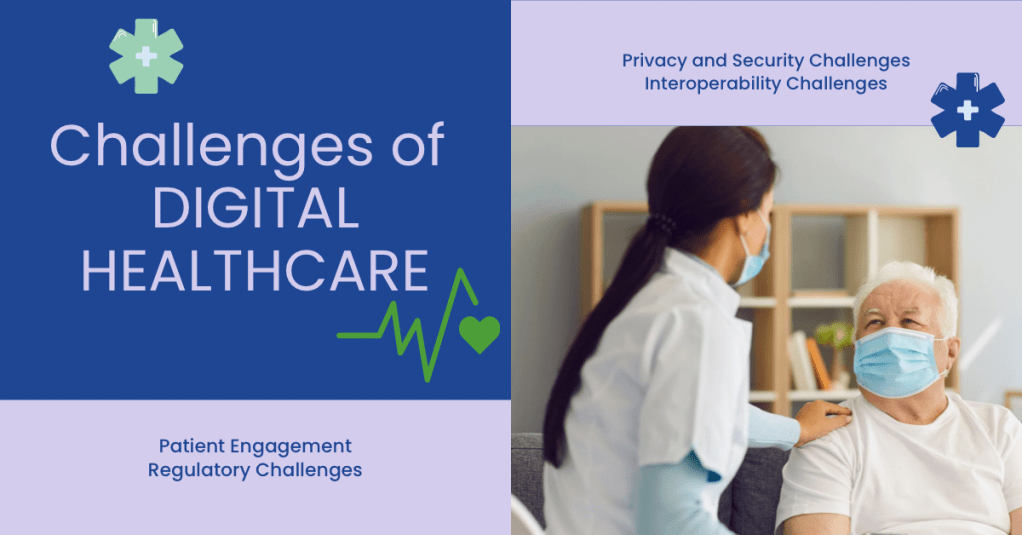
One of the key challenges is the need to establish clear and consistent standards for digital health solutions. While some devices and apps may be marketed as medical devices, there are many others that fall outside of this category and are not subject to the same regulations. This can make it difficult for healthcare providers and patients to assess the quality and safety of these solutions.
Digital health has been growing rapidly in recent years and has the potential to revolutionise healthcare. However, there are several challenges that need to be addressed:
1. Privacy and security: The digitization of health records and sensitive patient information has increased the risk of data breaches and cyber attacks. It is essential to ensure that health information is kept secure and private.
2. Interoperability: Different healthcare systems often use different data formats and standards, which hinders data sharing and collaboration between healthcare providers. There is a need for interoperability between various healthcare systems to ensure seamless data exchange.
3. Patient engagement: One of the main goals of digital health is to empower patients to take control of their own health. However, not all patients have access to digital tools or the knowledge to use them effectively. There is a need for patient education and better engagement strategies to ensure that patients are an active part of their healthcare journey.
4. Regulatory challenges: Digital health products and services are subject to different regulations and standards. Digital health refers to the use of technology, such as mobile apps, wearables, and other software solutions, to improve healthcare services and patient outcomes. While digital health has the potential to revolutionise the healthcare industry, it also presents regulatory challenges that must be addressed in order to ensure safety, effectiveness, and adherence to privacy laws.
Future of Digital healthcare
The future of digital healthcare is exciting and promising. With the growth of technology, we can expect to see more use of artificial intelligence, machine learning, and other advanced technologies to revolutionise how healthcare is delivered.
One of the important areas of digital healthcare is remote monitoring. Patients can now monitor their health conditions from the comfort of their homes through wearable devices and healthcare apps. This has significantly improved patient outcomes and reduced healthcare costs.
Another area where digital healthcare is making a significant impact is in telemedicine. With the help of video and audio communication, doctors can consult and diagnose patients without the need for physical visits. This has made healthcare more accessible and convenient for patients living in remote areas or with mobility issues.
In addition, the use of data analytics and big data is changing the way healthcare is managed. Health organisations can now analyse large sets of data to identify patterns, predict outcomes and identify at-risk patients. This has led to more personalised and targeted treatment plans that are more effective.
Use of big data and data Analytics in digital Healthcare

Big data in digital healthcare refers to the use of large and complex datasets from various sources such as electronic health records, wearable devices, and sensors, to gain insights into patient health and improve healthcare outcomes. The analysis of these data can help healthcare providers identify patterns and trends that can inform treatment decisions, predict and prevent diseases, and improve patient outcomes.
The use of big data and data analytics in digital healthcare plays a crucial role in improving patient care, reducing healthcare costs, and increasing efficiency. Here are some examples:
1. Patient Care: Big data and analytics can help healthcare providers improve patient care by analyzing patient data such as electronic health records, lab results, and imaging reports, to detect patterns and trends. This information can help healthcare providers make more informed decisions in patient treatment and diagnosis.
2. Predictive analytics: By using big data analytics, healthcare providers can identify patients who are at risk of developing chronic diseases such as diabetes, heart disease, and cancer. This can lead to early intervention and prevention strategies, reducing healthcare costs.
3. Research and development: Big data and analytics can also be used in drug discovery and research. By analysing large data sets, researchers can identify new drug targets and treatments more quickly and efficiently.
4. Healthcare resource optimization: Healthcare organisations can use big data analytics to optimise resource allocation, such as staffing, equipment, and
5. Population health management: Big data can be used to monitor and analyse the health of entire populations, allowing healthcare providers to identify and address public health concerns.
Global strategy of digital healthcare
The global strategy on digital healthcare involves the use of technology to improve the delivery of healthcare services. This includes the use of electronic health records, telemedicine, mobile health, and other technologies to enhance access, efficiency, and quality of care.
Here are some key components of a global strategy on digital healthcare:
1. Building health information systems: Health information systems should be developed and strengthened to support the collection, analysis, and dissemination of health data. This includes electronic health records, clinical decision support systems, and population health management platforms.
2. Encouraging telemedicine: Telemedicine can provide healthcare services to people who live in remote or underserved areas. Telemedicine can also be used to provide consultations and second opinions to patients.
3. Leveraging mobile health: Mobile health technologies, such as apps and wearable devices, can help patients manage their own health and wellness. These technologies can also facilitate remote monitoring and feedback.
Conclusion
The conclusion of digital healthcare is that it has revolutionised the healthcare industry by making healthcare more efficient, accessible, and cost-effective. With the implementation of electronic health records (EHRs), telemedicine, mobile health applications, and other digital tools, healthcare providers can now provide more personalised patient care and improve clinical outcomes.
Digital healthcare has also improved the patient experience by allowing patients to access their health information, communicate with healthcare providers, and receive care from the comfort of their own homes. Additionally, it has helped to reduce healthcare costs by providing care remotely and reducing the need for in-person visits and expensive medical procedures.
Overall, the future of healthcare is expected to be even more reliant on digital technologies as they continue to advance and become more sophisticated. This will likely result in further improvements in patient care, increased efficiency, and the development of new treatments and therapies.
FRequently Asked Questions

 Digitaholic
Leave a comment