Introduction
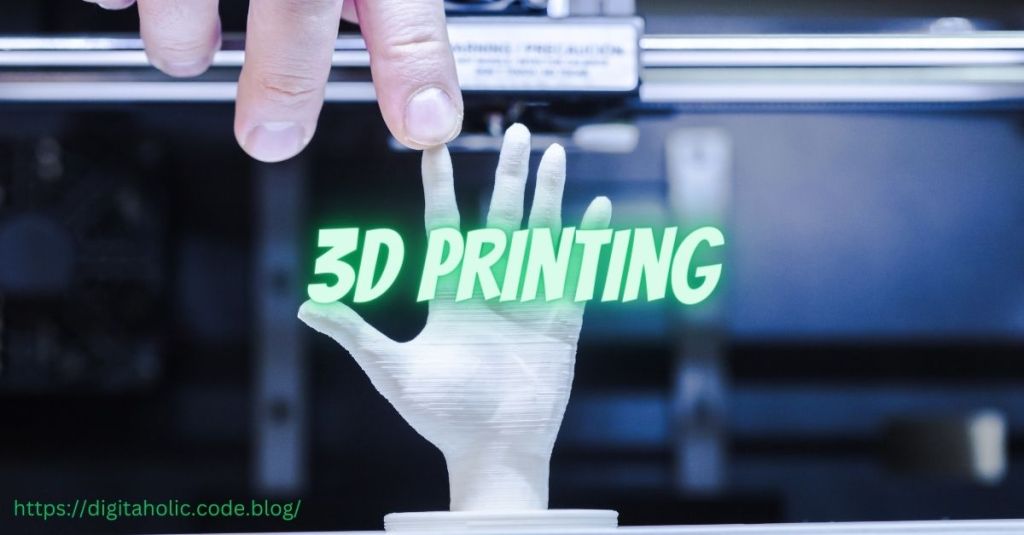
Additive manufacturing, also known as 3D printing, has rapidly gained popularity as a promising solution for medical manufacturing applications. The technology allows for the creation of complex geometries and structures that would be difficult, if not impossible, to produce with traditional manufacturing techniques.
In the medical field, additive manufacturing has been used to create a variety of custom-made medical devices, prosthetics, implants, and tissues. One of the major advantages of additive manufacturing is the ability to create personalised and patient-specific components that can improve patient outcomes and reduce recovery times.
Additive manufacturing has been used to create custom implants for orthopaedic and dental applications. For example, titanium implants can be 3D printed to match the exact shape of a patient’s bone, resulting in a more precise and comfortable fit. Additionally, additive manufacturing can significantly reduce the time required for implant production, as well as the overall cost of the procedure.
Another promising application of additive manufacturing in the medical field is the creation of bioprinted tissues and organs. Scientists are exploring the possibility of printing human organs, such as kidneys, liver, and heart, using a patient’s own cells. These organs could then be transplanted into the patient without the risk of rejection or the need for immunosuppressive drugs.
In addition to implants and organs, additive manufacturing has been used to create prosthetic limbs and other devices. Customised prosthetics can be created using 3D scanning technology to capture the exact contours of a person’s residual limb or anatomy. The prosthetic is then designed and 3D printed to perfectly match the individual’s unique needs and specifications.
Overall, additive manufacturing has the potential to revolutionise the way medical devices and structures are designed, manufactured, and implemented. By enabling the creation of personalised and patient-specific components, additive manufacturing can lead to improved outcomes, reduced costs, and increased accessibility of medical technologies.
Medical 3D Printing
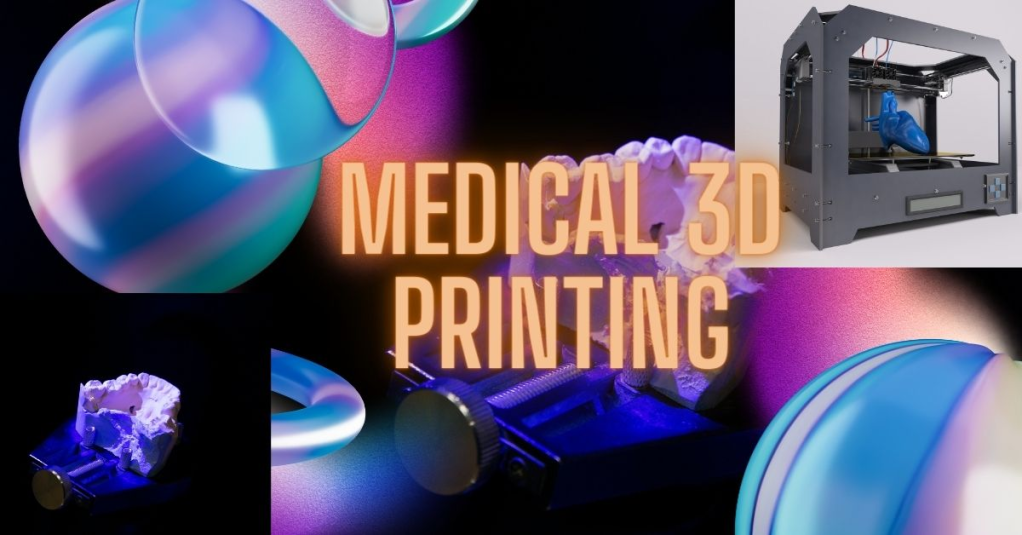
Medical 3D printing is a process of creating three-dimensional physical objects from digital models using a layer-by-layer additive manufacturing technique. This technology has revolutionized the way medical devices, implants, and prosthetics are developed and manufactured, offering unparalleled levels of customization and precision.
Medical 3D printing has numerous applications, including the creation of patient-specific implants, surgical models, and anatomical models. Patient-specific implants, such as those used in orthopedic and spinal surgeries, can be designed and fabricated to fit the unique anatomy of an individual patient, reducing the risk of complications and improving outcomes. Surgical models and anatomical models are used for planning and practicing complex surgeries, allowing surgeons to better understand the anatomy and plan procedures with greater accuracy.
Medical 3D printing has also been used in the development of prosthetics, including custom-made prosthetic limbs for amputees. By creating a 3D model of the patient’s residual limb, the prosthetic can be designed to fit precisely, providing a more comfortable and functional solution compared to traditional off-the-shelf prosthetics.
While medical 3D printing offers numerous benefits, it also presents some potential challenges, such as the need for more extensive testing and validation of 3D-printed medical devices and implants. Additionally, regulatory bodies are still navigating how to classify and regulate these devices. However, with proper safeguards and ongoing research, medical 3D printing holds tremendous promise for improving patient outcomes and advancing the field of medicine.
Types of 3D Printing Technologies
There are several different types of 3D printing technologies, each with its own advantages and disadvantages. Some of the most common include:
1. Fused Deposition Modeling (FDM):
This 3D Printing technology involves melting a plastic filament and depositing it layer by layer to build up the object. FDM is widely used for creating prototypes and small production runs.
2. Stereolithography (SLA):
SLA is a 3D Printing technology that uses a liquid resin that is cured by ultraviolet light to create the object. This technique is used for creating high-detail and precise objects, such as dental or medical models.
3. Selective Laser Sintering (SLS):
This 3D Printing method uses a laser to fuse together small particles of material to create the object. It is often used for producing parts with complex geometries and for creating end-use parts.
4. Binder Jetting:
In this 3D Printing technology, a binder is selectively deposited on a powder bed, layer by layer, to create the object. Binder Jetting is commonly used for producing metal parts.
3D printing technology has a wide range of applications across various industries, including aerospace, automotive, fashion, and healthcare. It has been used to create everything from complex aircraft parts to custom-fit prosthetics and surgical models.
Advantages of 3D printing technology include faster production times, reduced manufacturing waste, and the ability to produce highly customized parts. However, some challenges remain, such as the need for increased regulatory oversight on 3D-printed medical devices and implants, and ensuring the safety and quality of printed objects. Despite these challenges, 3D printing technology is increasingly becoming a mainstream manufacturing process, with significant potential for continued growth and innovation.
Implant Surgery
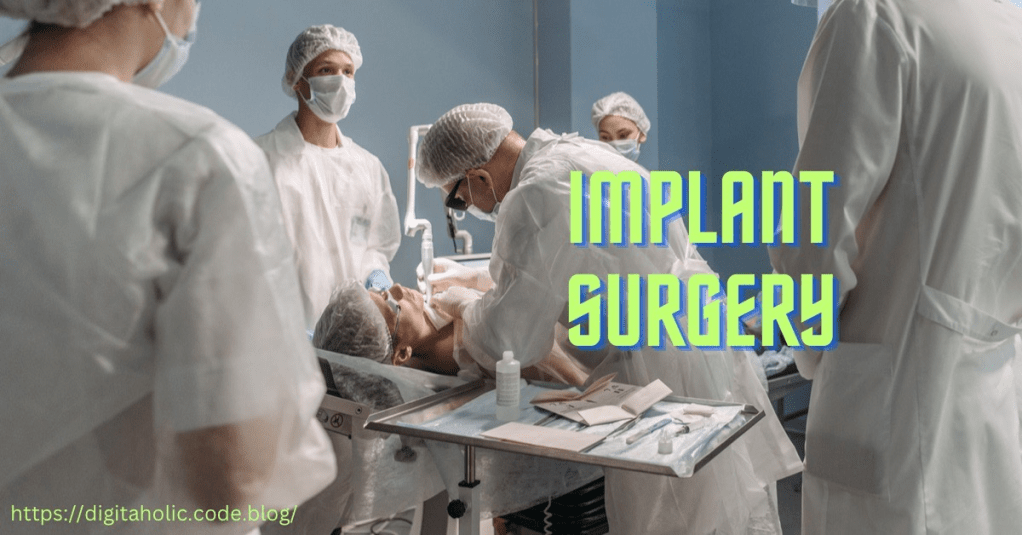
Implant surgery involves the replacement of one or more missing teeth with artificial ones that are anchored into the jawbone. The surgery is performed by a dental professional who places a small titanium post into the jawbone, which serves as the root for the new tooth.
The surgery typically involves several steps, including an initial consultation to examine the patient’s mouth and determine whether they are a suitable candidate for the procedure. A dental professional may also take x-rays or CT scans of the mouth and jawbone to better understand the patient’s oral health.
Once it has been determined that the patient is a suitable candidate for implant surgery, the next step involves placing the titanium post into the jawbone. This typically involves making an incision in the gum tissue and drilling a small hole into the bone to accommodate the implant post. The post is then inserted into the hole and secured into place with a specialized screw.
After the post has been inserted, the implant must be allowed to integrate with the jawbone, a process that typically takes several months. During this time, the patient may be fitted with a temporary tooth replacement to minimize the impact of the missing tooth.
Once the implant has fully integrated with the jawbone, the next step involves placing a small connector, called an abutment, onto the implant post. This connector serves as the attachment point for the replacement tooth.
Finally, a custom-made replacement tooth, called a crown, is fitted onto the abutment to complete the procedure. The crown is typically created to match the shape and color of the patient’s natural teeth, providing a seamless and natural-looking replacement.
Implant surgery has become an increasingly popular option for individuals with one or more missing teeth, offering a range of benefits over traditional tooth replacement options such as dentures or bridges. These benefits include improved functionality, reduced risk of bone loss, and a more natural-looking and long-lasting result.
PEEK Implant
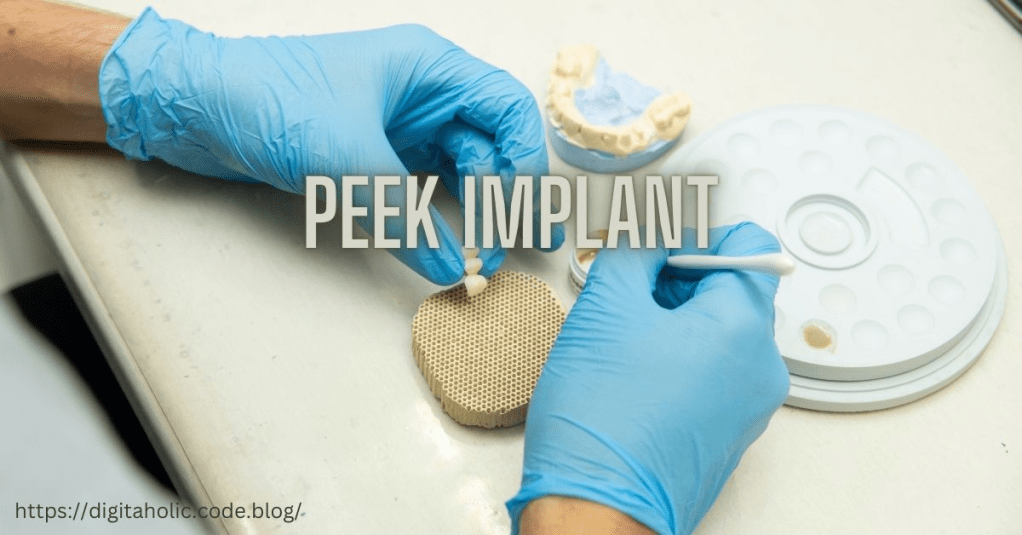
PEEK (Polyether ether ketone) implant is a first ever, Completely interconnected 3D Implant for commercial use. It is a medical device made of a high-performance thermoplastic polymer that has been widely used in orthopaedic and spinal surgeries. PEEK implants are known for their biocompatibility, corrosion resistance, and radiolucency, which allows for better visualisation of postoperative imaging studies. PEEK material also has a modulus of elasticity that is similar to bone, reducing the stress shielding effect that can cause bone resorption in metal implants.
PEEK implants are commonly used in spinal fusion surgeries, where the implant is inserted between adjacent vertebrae to stabilize the spine and promote fusion. PEEK implants are also used in joint replacement surgeries, such as hip and knee replacements, as well as in dental implants.
PEEK implants have shown good clinical outcomes and are associated with lower rates of implant failure, inflammation, and pain compared to traditional metal implants. However, PEEK implants are not recommended for patients with a history of PEEK allergies or sensitivity. Also, PEEK implants may not be suitable for all surgical applications, and patients should discuss their options with their healthcare provider to determine the most appropriate treatment option for their individual needs.
Future of 3D Printing
The future of 3D printing, also known as additive manufacturing, looks bright, and the technology is expected to play a significant role in various industries. Here are some of the potential developments that we can expect to see in the world of 3D printing:
1. Increased Speed and Efficiency: One of the significant challenges that 3D printers face is speed and efficiency. While the current technology is already impressive, researchers and scientists are working on developing faster and more efficient 3D printers. This could lead to a significant boost in productivity, making 3D printing more viable for mass production.
2. Better Materials: Currently, the most commonly used material for 3D printing is plastic. However, researchers are exploring new and improved materials like metals, rubber, carbon fiber, and ceramics, to name a few. This could lead to the creation of highly durable and fully functional 3D printed objects.
3. Medical Breakthroughs: 3D printing is already being used extensively in the medical field, but we can expect more significant breakthroughs in the future. For instance, researchers are exploring ways to create fully functional 3D printed organs that can be transplanted into patients. This could significantly reduce the number of people who die while waiting for organ transplants.
4. Customized Products: As 3D printing allows for mass customization, we can expect to see more products tailored to specific customer needs. This could lead to a surge in demand for customization, which could, in turn, drive down costs.
5. Sustainable Manufacturing: 3D printing could be used to replace traditional manufacturing methods that are not environmentally friendly. The technology is already being used to recycle materials like plastic and reduce waste while creating new products.
In conclusion, the future of 3D printing looks bright, and we can expect to see more significant developments in the technology that will impact various industries, making manufacturing more efficient, sustainable, and personalized.
Frequently Asked Questions
-
Question 1. What is 3D printing and how does it work?
Answer 1. 3D printing, also known as additive manufacturing, is the process of creating three-dimensional solid objects from a digital file.
- The process begins with a 3D model, which is created using computer-aided design (CAD) software or obtained from a 3D scanner. The digital file is then sent to the 3D printer, which reads the file and builds the object layer by layer.
- There are several types of 3D printing technologies, but the most common is Fused Deposition Modeling (FDM). In FDM, a plastic filament is fed through a heated nozzle that melts the filament as it is deposited onto a build platform. The printer then moves along the x, y, and z-axis, adding successive layers of the melted material, until the object is complete.
- Other 3D printing technologies include Stereolithography (SLA), Digital Light Processing (DLP), and Selective Laser Sintering (SLS), which use different materials and processes to create 3D objects.
- Once the printing process is complete, the object is usually removed from the printer and then undergoes post-processing, which could involve removing support structures, sanding, and painting, among others.
- Overall, 3D printing is a revolutionary technology that has the potential to disrupt traditional manufacturing methods by providing faster, cheaper, and more flexible production capabilities. .
-
Question 2. What do you mean by 3D printing?
Answer 2. 3D printing, also known as additive manufacturing, is the process of creating a physical object from a digital design by adding material layer by layer until the final shape is achieved.
- Unlike traditional manufacturing methods that require cutting, drilling, and shaping a material to create a product, 3D printing builds the object from scratch by adding thousands of layers of material on top of each other. This process is typically done using a 3D printer, which interprets the digital design file and guides the printer to deposit material to create the final product.
- 3D printing technology allows for complex designs and shapes that are difficult or impossible to make with traditional manufacturing methods. It is used in various industries such as healthcare, automotive, aerospace, and consumer goods. 3D printing has the potential to revolutionize the way we manufacture products by making it easier and less expensive to produce small batches, customized products, and prototypes. ..
-
Question 3. What is virtual 3D printing?
Answer 3. There is no such thing as virtual 3D printing. However, the term “virtual printing” can refer to the process of creating a digital representation of a physical object that can be printed out using a 3D printer.
- Virtual 3D printing involves creating a 3D model using CAD software, which is then sent to a 3D printer to create a physical object. This process is commonly used in industries such as product design, architecture, and engineering to create prototypes and test designs before investing in expensive manufacturing equipment.
- Virtual 3D printing can also refer to the use of 3D printing in virtual reality (VR) environments. This involves creating 3D models within a virtual environment, which can then be printed out in the real world. This technology is still in its early stages, but it has the potential to revolutionize the way we create, design, and interact with physical objects. ..

 Digitaholic
Leave a comment