Introduction
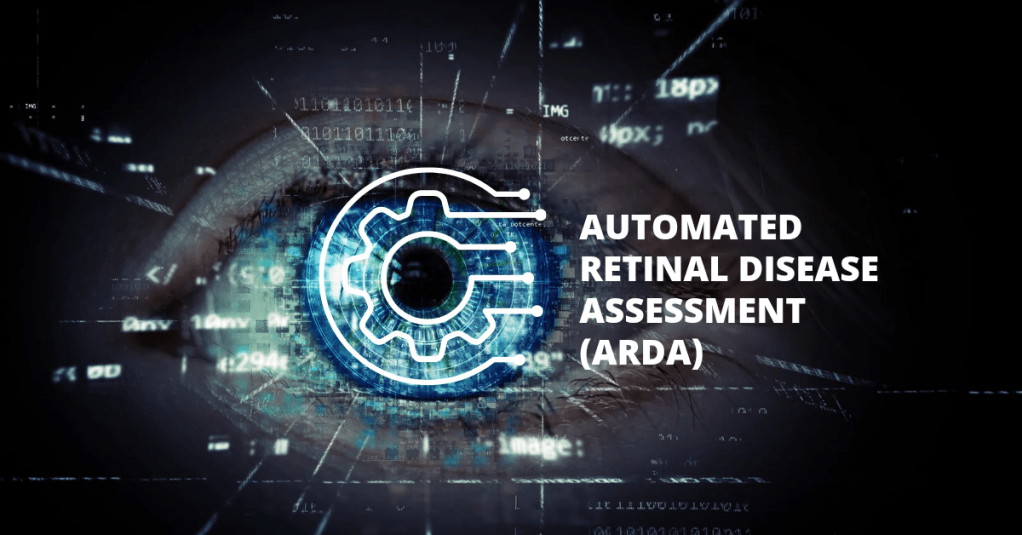
Google started a journey to manifest its power with AI into Health Tech through its latest innovation ARDA (Automated Retinal Disease Assessment). This research started 4 years ago where a team of Google researchers and Arvind Eye hospital embarked into a mission to invest in a leading cause of Blindness all around the world.This project aimed to detect diabetic retinopathy by the use of an automated tool.
Google’s AI breakthrough has revolutionized the health tech industry, offering a potential alternative to traditional diagnostic methods like CT scans, MRIs, and X-rays. With the help of the company’s AI technology, The algorithm can recognize the signs of the disease and deliver a diagnosis within seconds when supplied with a patient’s retinal photos. The AI’s capabilities have expanded to include identifying a person’s sex, smoking status, and predicting the five-year risk of a heart attack based on retinal imagery.
The retina, specifically the fundus, is a window into the body’s overall health, reflecting blood vessels that reflect the body’s overall health. By studying the retina’s appearance, doctors can infer critical information like blood pressure, age, and smoking habits, which are important predictors of cardiovascular health. To train their cardiovascular prediction algorithm, Google and Verily’s scientists used machine learning to analyse a medical data set of nearly 300,000 patients.
Neural networks were then used to mine this information for patterns, learning to associate telltale signs in the eye scans with the metrics needed to predict cardiovascular risk, such as age and blood pressure. Google’s AI was able to distinguish between retinal images of two patients, one who suffered a cardiovascular event in the following five years and one who did not, 70% of the time.
This performance was only slightly lower than the commonly used SCORE method of predicting cardiovascular risk, which requires a blood test and makes correct predictions 72% of the time. This revolutionary method of assessing cardiovascular risk not only makes it quicker and easier for doctors but also signals a shift towards a new AI-powered paradigm for scientific discovery. With enough data, artificial intelligence could generate entirely new medical insights without human direction, making it a significant advancement in health tech and the future of health diagnostics.
Conclusion
Google Innovation in Healthcare has aced the race of showcasing the power of AI in the medical field. This breakthrough has not only revolutionized Health Tech but has also made a significant advancement in the future of health diagnostics. The future possibilities with AI algorithms will help clinicians all around the world in identifying various other diseases. This tremendous revolution has left us with questions about whether Google is paving its way to healthcare? Will Google be using AI in innovating more of such technology? Will these power AI generated technology replace the current humongous medical devices? and will the introduction of AI into the medical world eliminate the necessity of traditional hospital infrastructure in the future?

 Digitaholic
Leave a comment