Introduction
When talking about newborns and AI, we usually refer to the use of artificial intelligence in the context of caring for newborn babies. AI can support various aspects of newborn care, including monitoring, assistance, and decision-making.
One way AI is used for newborn care is through monitoring systems. For example, AI algorithms can analyze data collected from sensors on a newborn’s body to track vital signs such as heart rate, respiration rate, and oxygen levels. These algorithms can quickly detect abnormalities or potential health risks, allowing healthcare providers to intervene promptly.
AI can also assist in the early identification of diseases or conditions in newborns. By analyzing large datasets and using machine learning algorithms, AI can help predict the likelihood of certain genetic or congenital disorders. This can enable early intervention and personalized treatment plans, improving the outcome for newborns.
In addition, AI has the potential to support decision-making processes in neonatal intensive care units (NICUs). With the help of AI algorithms, healthcare professionals can access relevant patient data, medical literature, and treatment guidelines to make informed decisions about newborn care.
However, it is crucial to consider ethical concerns when implementing AI in the care of newborns. Privacy, data security, and informed consent are important considerations to ensure that AI technologies are used responsibly and in the best interest of the newborn and their family. Human oversight and involvement should also be maintained to ensure that AI is complementary to, rather than replacing, the expertise and compassion of healthcare providers.
Overall, the use of AI in newborn care holds promise for improving outcomes and enhancing the quality of care for newborns. However, careful consideration and implementation are necessary to ensure that ethical and safety standards are upheld.
Role of AI in In-Vitro Fertilization (IVF)
Artificial intelligence (AI) can also play a role in in-vitro fertilization (IVF) procedures, which involve the fertilization of an egg outside the body followed by the transfer of the resulting embryo into the uterus.
One area where AI can be used in IVF is in embryo selection. Currently, embryologists visually assess embryos under a microscope to identify the healthiest ones for transfer. However, this process can be subjective and prone to human error. AI algorithms can analyze large amounts of data from time-lapse videos or images of embryos and help embryologists identify patterns and features associated with successful implantation. This can potentially improve the accuracy of embryo selection and increase the chances of a successful pregnancy.
Additionally, AI can help optimize the timing of embryo transfer. By analyzing data from a woman’s hormone levels and other relevant factors, AI algorithms can help determine the ideal time for embryo transfer, increasing the chances of successful implantation.
Moreover, AI can also be used to predict the likelihood of successful IVF outcomes. By analyzing various patient factors, such as age, medical history, and previous fertility treatment data, AI algorithms can provide personalized predictions regarding the success rate of IVF procedures. This can help couples make more informed decisions about their fertility treatment options.
However, it’s important to note that while AI has the potential to enhance and improve IVF procedures, it should be seen as a tool to support and aid fertility specialists rather than replace them. Human expertise and judgment are still crucial in making final decisions regarding embryo selection and treatment plans.
Furthermore, ethical considerations such as data privacy, informed consent, and transparency in the use of AI in IVF must be carefully addressed to ensure that patients’ rights and autonomy are protected.
Overall, the integration of AI in IVF procedures holds great potential for improving success rates, reducing the burden on patients, and enhancing the overall efficiency of fertility treatments. Nonetheless, careful validation, responsible implementation, and ongoing research are necessary to ensure that AI technologies are developed and used in a safe, ethical, and effective manner.
Artificial intelligence (AI) can have various applications and benefits during pregnancy, both in terms of monitoring the health of the mother and the baby, as well as providing personalized healthcare and support.
Prenatal monitoring and AI
One area where AI can be utilized is in prenatal monitoring. AI algorithms can analyze data from devices such as fetal heart rate monitors and ultrasound scans to detect any abnormalities or signs of potential complications. This can help healthcare professionals identify issues early on and take appropriate measures to ensure the well-being of both the mother and the baby. AI can also help monitor the mother’s health, such as tracking blood pressure levels or identifying signs of gestational diabetes.
Another aspect where AI can make a difference is in the field of personalized healthcare and decision-making during pregnancy. By analyzing a mother’s medical history, genetic data, and other relevant factors, AI algorithms can provide insights and recommendations that are tailored to her specific needs. This can help healthcare providers develop personalized care plans and make more informed decisions regarding diet, exercise, and medication during pregnancy.
AI can also be beneficial in providing support and guidance to expectant mothers. Through chatbots or virtual assistants, AI can be used to answer common queries, address concerns, and provide educational resources regarding pregnancy and childbirth. These tools can offer valuable information and reassurance to mothers, especially in situations where access to healthcare professionals is limited.
However, it is important to note that AI should never replace the human touch and expertise in prenatal care. Pregnancies can be complex, and it is essential to have healthcare professionals who can provide the necessary expert guidance and support. AI should be seen as a complement to, rather than a replacement for, the care provided by doctors, midwives, and other healthcare providers.
Ethical considerations must also be taken into account when implementing AI in the field of pregnancy. Issues regarding data privacy, consent, and patient autonomy need to be carefully addressed to ensure that AI technologies are used responsibly and in accordance with the best interests of the mother and the baby.
In summary, AI has the potential to enhance prenatal care by monitoring the health of both the mother and the baby, providing personalized healthcare, and offering guidance and support to expectant mothers. However, the integration of AI should be done in a responsible and ethical manner, ensuring that human expertise and patient well-being are always prioritized.
AI tools before and after pregnancy
AI tools can be used both before and after pregnancy to support and enhance healthcare for women, but it is unlikely that AI will fully replace gynecologists in the future. Here’s why:
Before Pregnancy: AI can be used to provide preconception guidance and support. It can analyze a woman’s health data, medical history, genetic information, and lifestyle factors to offer personalized recommendations regarding fertility, lifestyle adjustments, and potential risks to consider before trying to conceive. AI can also help with predicting fertility windows and optimizing timing for conception.
During Pregnancy: AI can assist in monitoring the health of both the mother and the baby during pregnancy. It can analyze various data sources, such as ultrasound results, blood tests, and vital sign monitoring, to detect any potential issues or abnormalities. AI algorithms can support healthcare providers in making informed decisions about prenatal care, identifying high-risk pregnancies, and recommending appropriate interventions.
After Pregnancy: AI can continue to be valuable postpartum. It can provide guidance regarding breastfeeding, postpartum recovery, and infant care. AI-powered apps or virtual assistants can offer educational resources, answer common questions, and provide support for new mothers.
will AI replace gynecologists in the future?
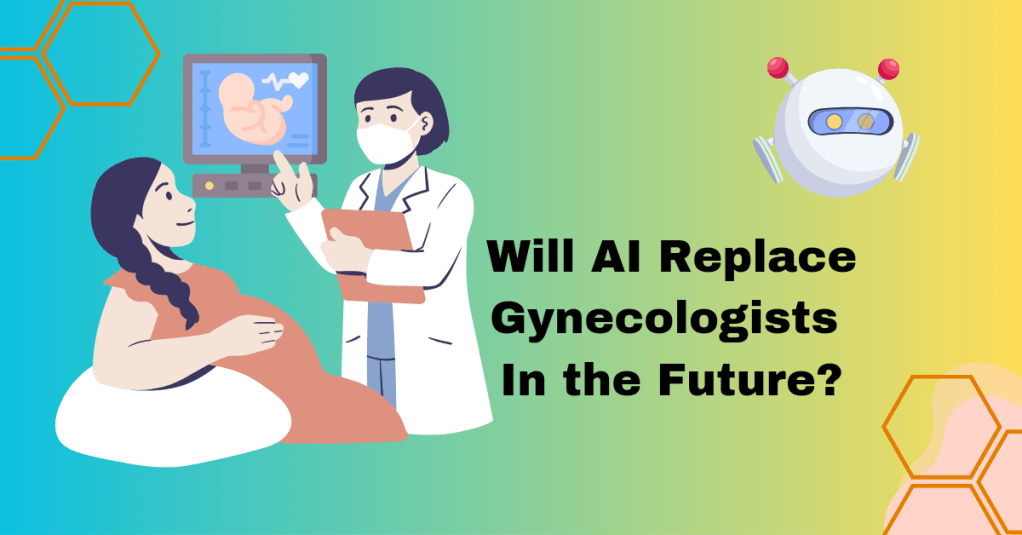
While AI can provide valuable tools and support throughout the journey of pregnancy, it is unlikely to replace gynecologists and obstetricians entirely. Gynecologists play a crucial role in providing personalized care, conducting physical examinations, interpreting complex data, performing procedures, and making critical decisions. They also offer emotional support and guidance that AI systems can not replicate. AI should be viewed as a complementary tool that supports healthcare providers and augments their decision-making process.
Furthermore, ethical considerations, patient preferences, and the importance of the doctor-patient relationship play significant roles. Many patients value the human connection and trust that comes from an interpersonal relationship with their healthcare provider. Healthcare professionals are essential for interpreting complex medical information, counseling patients, and offering empathy, compassion, and understanding during sensitive or challenging moments.
In conclusion, AI tools have the potential to enhance prenatal and postnatal care, but they are unlikely to replace gynecologists and obstetricians. AI should be viewed as a supportive and complementary tool that works in tandem with healthcare professionals to provide comprehensive and personalized care to women throughout their reproductive health journey.
Future of AI in creating new life
The future of AI in creating a new life is a topic of ongoing scientific and ethical discussions. While it is currently not possible for AI to directly create life in the way that humans do, there are several areas where AI can potentially play a role in reproductive technologies.
It is important to note that AI, at present and for the foreseeable future, is not capable of replicating the complex biological and emotional aspects of human reproduction. The creation of life through natural methods involving human conception and birth involves numerous intricate processes that extend far beyond the capabilities of AI. Thus, while AI may have a role in supporting and enhancing certain aspects of reproductive technologies, the core aspects of creating and nurturing life remain firmly within the realm of human biology and experience.
1. Assisted Reproductive Technologies (ART): AI can assist in various aspects of ART procedures, such as in vitro fertilization (IVF). AI algorithms can be used to analyze large datasets of patient information, genetic data, and reproductive health records to help improve success rates, optimize embryo selection, and predict the likelihood of successful outcomes. AI can also aid in refining techniques like sperm and egg selection, embryo cryopreservation, and embryo implantation.
2. Genetic Editing and Somatic Cell Manipulation: While not directly related to creating life, AI could potentially be used to enhance techniques such as gene editing or somatic cell manipulation. AI algorithms could help analyze and interpret vast amounts of genetic and molecular data to improve precision and accuracy in these processes.
3. Artificial Wombs and Synthetic Biology: Research is being conducted on the development of artificial wombs or external womb-like environments to support fetal development outside the mother’s body. While AI may not be directly involved in the creation of life in these scenarios, it could potentially assist in monitoring and controlling the artificial womb environment to optimize growth and development.
4. Ethical Considerations: The use of AI in reproductive technologies raises various ethical considerations. These include questions about privacy, consent, the potential for eugenics or genetic manipulation, and the overall impact on society. Addressing these concerns and ensuring responsible implementation will be crucial in shaping the future of AI and creating new life.

 Digitaholic
Leave a comment